You Are Not What Happened to You
Stop Letting Hardship Become Your Identity
Hardship can change you. Repeated failure can make you stop trying. Years of disappointment can make a life built around simply getting through the day feel normal. But at some point, you have to decide that what happened to you will not determine who you become. This is your life. Don't let the worst things that happened to you become the best explanation for why you stopped living.
Hardship Can Change Who You Are
People go through hardship, and for some people, that hardship can last a long time. You can slowly lose yourself. You once used to be happy, but now you rarely smile. Maybe you've tried and failed a lot, and eventually you learn helplessness. You start to believe that nothing you do will really change anything. You start to lose hope and your faith deteriorates, and sometimes you can't find the light.
You stop looking forward to things. You stop making plans because it feels pointless to imagine a different future. You may still get up, go to work, take care of what needs to be taken care of, and keep moving, but inside, you feel like you're just going through the motions.
Sometimes the pain becomes so constant that you stop noticing how much you're carrying. You feel exhausted even when you haven't done much. You feel numb, angry, frustrated, like a failure, or completely empty inside. Small things that wouldn't have bothered you before can suddenly feel overwhelming. You want to feel like yourself again, but you don't even know where to start.
And eventually, that pain can start affecting the people around you. You become distant. You stop answering messages. You lose patience with people who are only trying to help. You might push away the people who care about you because you don't have the energy to explain what you're going through. Sometimes you hurt people without meaning to, because you're so consumed by your own pain that you don't have much left to give.
And the hardest part is that you can get used to it. What started as a difficult period can slowly become your normal. You stop remembering what you were like before everything became so heavy. You stop asking, “How do I get my life back?” and start asking, “How do I get through today?”
After enough time, you can forget what it even felt like to be excited about your life. You start to think this is just who you are now.
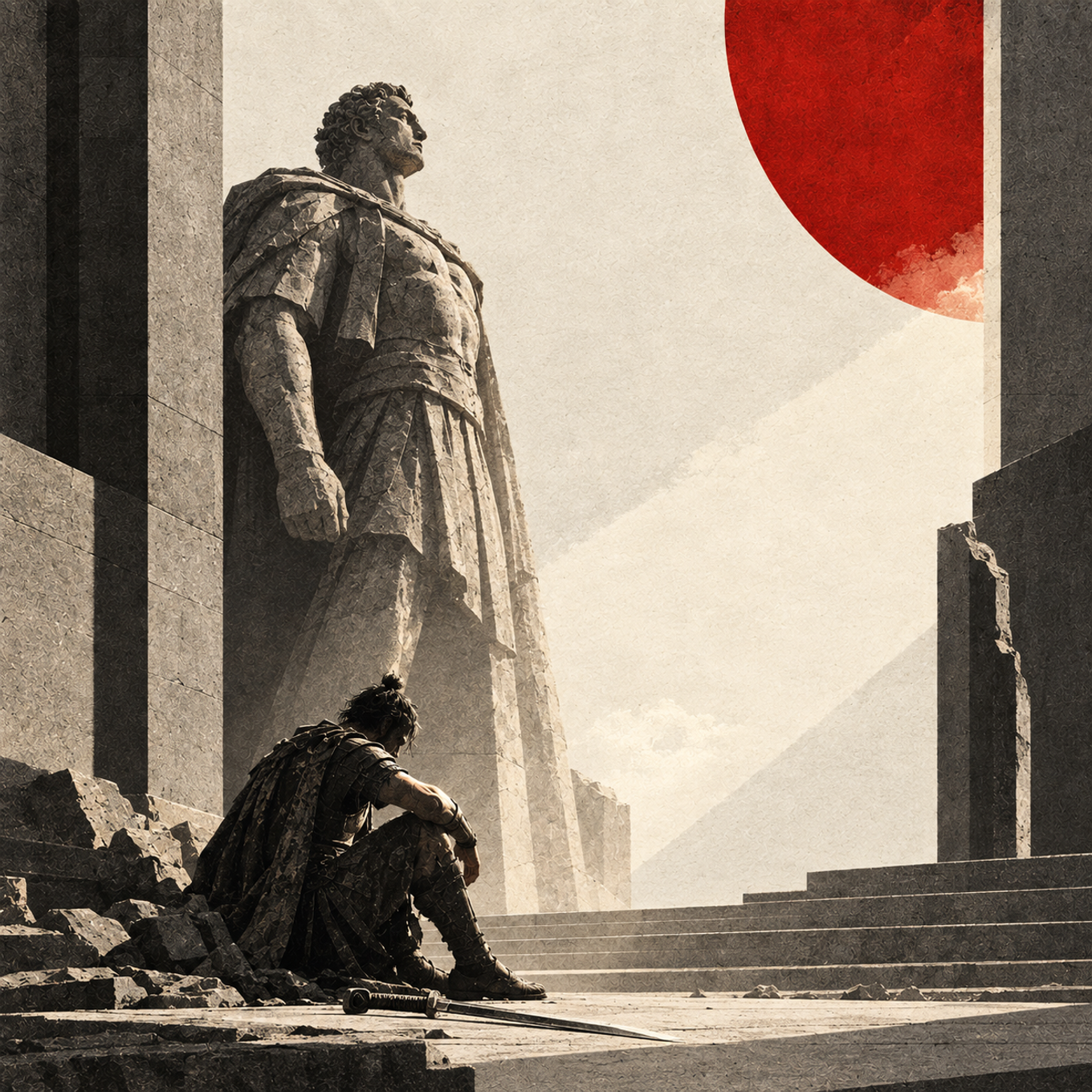
It hurts deeply to be in that state. You think everyone thinks negatively of you. You see others progressing and doing better, while you feel like you're standing still. You can start to feel like something is wrong with you. Like maybe you're not capable enough, disciplined enough, smart enough, or lucky enough to change your situation.
You see other people moving forward while you're still trying to figure out how to get back on your feet. And after enough time, you can start believing that this is just how your life is going to be.
And it kills you inside because you know this is the only chance at life you have. You know you're capable of more, but you can't seem to get yourself there. You watch the days go by, knowing you aren't living the way you want to live. You want to change, you want to feel like yourself again, you want to have something to look forward to, but somewhere along the way, you lost the belief that things could actually get better.
Sometimes it feels like death is more forgiving than living, but a part of you still has a little faith that maybe things can turn around. Maybe something will change. Maybe you can find your way back to yourself. You don't know how, and you don't know when, but some small part of you still believes there might be something worth holding on to.
And if you are in this state right now, from my whole heart, I do wish you hold on to that faith, because I believe eventually you will find a way out of the valley.
How Hardship Can Turn Into a Life of Survival
At some point, you can get so used to hardship that your life becomes about getting through the day. You wake up, go to work, take care of whatever needs to be taken care of, come home, and do it all again tomorrow.
You're still functioning, but you're not really living. You're thinking about what you need to get through today. You stop making plans because the future feels too far away. You stop chasing things because you don't have the energy to deal with another disappointment.
And this can go on for a long time. Days turn into weeks, weeks turn into months, and eventually you look back and realize you've spent years just trying to make it through.
At first, you want things to change. You tell yourself this is temporary. You believe that eventually things will get better and you'll get back to the person you used to be.
But when nothing changes for long enough, you start building your life around it. Your schedule changes. Your habits change. You stop doing the things you used to enjoy. You stay home more. You become more isolated. Your days start following the same routine because it's easier than trying to change anything. You begin organizing your life around simply getting through it, and eventually that routine starts to feel normal.
You learn how to live with less. Less excitement. Less hope. Less ambition. Less connection. You become good at getting through the day, but you forget what it feels like to actually look forward to tomorrow. And that's when survival starts becoming a way of life.
Your World Gets Smaller
When you're struggling for a long time, your world can slowly become smaller without you even noticing. You stop going places. You stop meeting new people. You stop trying new things.
You might tell yourself you're just tired, that you'll get back out there when things get better. But the longer you stay in that routine, the harder it becomes to break out of it. You can go months without doing something you genuinely enjoy, and then realize you can't remember the last time you felt excited about anything.
The less you experience, the less you have to look forward to. And the less you have to look forward to, the easier it becomes to stay exactly where you are.
The longer you live that way, the more those beliefs get reinforced by your own behavior. You don't apply because you don't think you'll get the job. You don't start because you don't think you'll finish. You don't reach out because you assume nobody wants to hear from you.
Then your actions start confirming what you already believe about yourself. That's how a difficult period can slowly become an identity.
There is nothing wrong with surviving when life is hard. Sometimes getting through the day is all you can do. The problem is when getting through the day becomes the only thing you know how to do.
Years can pass this way. You keep telling yourself you'll change when you feel better, when you have more energy, when life becomes easier. But those conditions may never arrive on their own.
And while you're waiting, life keeps moving. Opportunities pass. Relationships change. Your body gets older. The things you once wanted can start feeling further and further away.
Eventually, you can become so used to surviving that trying to build a different life feels harder than staying where you are. And you stop believing that your actions have any power to change your life.
Why Repeated Failure Can Make You Stop Trying
When you've tried enough times and nothing seems to change, eventually you start questioning why you're trying at all. You can put in the effort, make the plan, give it everything you have, and still end up right back where you started.
Maybe your parents spent years telling you that you're a failure. Maybe a boss called you incompetent and fired you. Maybe you tried to build something and watched it fall apart. Maybe you kept applying for jobs and getting rejected. Maybe the people you trusted kept reminding you of everything you weren't good enough at.
After enough of that, the failures start to feel like more than individual events. You don't necessarily decide to give up. You just stop expecting things to work out. You tell yourself there's no point. Why apply for another job if you'll just get rejected? Why start again if it will probably fail? Why put yourself through that process again?
You begin to think, “Maybe they're right. Maybe I really am a failure. Maybe I'm just not capable of doing what other people seem to do so easily.” And when you start believing that, trying becomes harder. At some point, doing nothing can feel safer than trying and failing again.
What Is Learned Helplessness?
Psychologists call this learned helplessness. It can happen when you've experienced enough situations where your actions seem to have no effect on the outcome.
You try to change something, but it doesn't work. You try again, and it still doesn't work. Eventually, you start learning that your effort doesn't matter.
Imagine someone who has tried to start a business several times and failed every time. Eventually, they stop trying because they begin to believe that they are simply not capable of making it work. Then they come up with an idea they genuinely believe could succeed, but they never act on it. They have already decided how it will end, so they never give themselves the chance to find out.
Or imagine someone who has tried to lose weight several times. They start exercising, change their diet, and stick with it for a while, but eventually fall back into their old habits. After doing this enough times, they may stop believing they can change at all. Even when they know what to do, they don't start because they've already convinced themselves that they'll fail again.
The important word is learned. You weren't born believing that nothing you do matters. You learned it through experience.
And once that belief becomes strong enough, it can follow you even when your circumstances change. You may have a new opportunity in front of you, but instead of seeing a chance to change your situation, you expect the same failure you've experienced before.
You failed the exam, so maybe you're not smart enough. You got fired, so maybe you're incompetent. Your relationship ended, so maybe you're impossible to love. Your business failed, so maybe you're not capable of building anything.
One failure can hurt. A series of failures can start changing the way you see yourself. You begin collecting every mistake, rejection, and disappointment and using them to build a case against yourself. Eventually, you don't need someone else to tell you that you're not good enough. You start telling yourself.
And once you believe those things about yourself, every new challenge becomes another opportunity to prove yourself right.
You Stop Seeing Opportunities
Once you've convinced yourself that your actions won't change anything, you start seeing opportunities differently.
A job opening becomes another rejection waiting to happen. A new relationship becomes another chance to get hurt. A business idea becomes another way to lose money.
The opportunity is still there, but you don't see it the same way anymore. You might tell yourself you're being realistic, but sometimes what feels like realism is just a belief you've repeated so many times that it starts to feel like a fact.
And the more opportunities you pass up, the more evidence you collect that your life isn't changing. The cycle continues. Once you believe that your actions don't matter, you start acting like they don't. You stop speaking up. You stop taking chances. You stop reaching out. You stop starting things because you've already decided how they'll end.
Then nothing changes…
That's what makes learned helplessness so difficult to break. The belief changes how you behave, and your behavior keeps the belief alive. You stop taking chances because you expect things to go wrong. Then your life becomes smaller, which gives you even more reason to believe that nothing will change.
And after living this way for long enough, it can start to feel like you're simply seeing reality for what it is. And truth is you’re not. You're seeing reality through everything you've already learned to expect.
Those experiences can shape you. They can change the way you think, the way you act, and what you expect from life. But they don't permanently decide who you are.
You learned these patterns through experience, which means they can change through experience too.
You don't need to suddenly believe that everything will work out. You just need to stop treating your past as proof of your future. You can learn to try again. You can learn to trust yourself again. You can learn that your decisions still matter.
It won't happen all at once. But you are not trapped by what you learned.
When you start changing the way you live, don't expect your life to change overnight. You've spent months or years building these habits and beliefs. You can't expect a few good days to undo all of that.
At first, you might do everything differently and still feel the same. You might take a chance and still be afraid. You might make a good decision and still doubt yourself. You might put in the work and see almost nothing happen.
Keep going anyway. New behavior needs time to become normal. Your mind needs time to adjust. Your life needs time to respond.
You Have to Start Taking Control Again
You have spent enough time trying to understand why you became this way. You know what happened. You know what it cost you. You know how long you've been living like this. Now you have to decide what you're going to do about it.
Stop waiting for your life to change on its own. Stop waiting for the perfect opportunity, the perfect plan, the sudden burst of motivation, or the day when you finally wake up feeling like the person you used to be. That day isn’t coming.
You can spend years talking about what happened to you. Your parents. Your failures. The people who hurt you. The opportunities you never got. The years you lost. And maybe every reason you have is legitimate. Maybe life really did deal you a terrible hand.
There comes a point where you have to stop explaining your life and start dealing with it. You are the one who has to live your life. No one is going to crawl into your head and remove the fear you've built there. No one is going to give you back the years you lost. No one is going to wake up tomorrow and suddenly make you disciplined, confident, healthy, ambitious, or happy.
At some point, you have to get up and do it yourself. You can keep living the same day over and over, or you can start doing something different. Your life belongs to you.
You decide what happens next. You decide when you wake up, what you put in your body, who you let near you, and what you do with your time. Those decisions are yours and nobody can take them unless you hand them over. So stop handing them over. Stop waiting for permission. Stop waiting to feel ready.
Nobody is coming to save you…Please truly realize that. Nobody is coming. There is just you…Everything you want sits on the other side of a decision only you can make. You don't need another explanation. You need to act. Then act again the next day, and the next day.
Take responsibility for your life without blaming yourself for everything that happened to you. You are responsible for what you do with your life now.
You cannot change what happened. You can change what happens next. If something in your life is broken, deal with it. If you made a mistake, admit it. If you need to change, change.
You need to take responsibility for becoming better.
Build Something Better
The first thing you need to rebuild is your trust in yourself. If you say you're going to do something, do it. If you say you're going to wake up early, get up. If you say you're going to train, train. If you say you're going to finish something, finish it.
You need to start making decisions again. Stop sitting in the middle, waiting until you can guarantee the outcome. You can't. You never could. Choose what you want. Choose what you don't want. Choose what stays in your life and what leaves it. Choose what deserves your time and what doesn't.
You will make the wrong decision sometimes. Make it anyway. Learn from it. Correct course. Make another decision. Indecision will keep you exactly where you are. You don't need to know where every road leads. You need to pick a direction and start walking.
Don't make some enormous promise that you'll completely transform your life. Pick something you know you can do, and do it. Then do it again tomorrow.
Every time you do something you once believed you couldn't do, you weaken the belief that you're powerless. Every time you follow through when you wanted to quit, you prove that your decisions still carry weight. Every time you take responsibility instead of making another excuse, you take something back.
You don't need some massive victory. You need proof. Then get more proof. And keep going until the person you used to believe you were becomes harder and harder to recognize.
Taking your life back is only the beginning. You can stop the habits that were destroying you, start keeping your word, and take control of your decisions.
But if you go right back to the same environment, the same people, the same routines, and the same way of thinking, it becomes easy to fall back into the person you were trying to leave behind.
You have to rebuild. And that starts with looking at what surrounds you.
The People Around You
Pay attention to who you spend your time with. Some people will keep reminding you of who you were. Some will make your worst habits feel normal. Some will only know how to interact with the version of you that was struggling.
You don't have to hate them. You don't have to make some dramatic announcement and disappear from everyone's life. But you do have to decide who gets access to you
Spend more time around people who are building something. People who take their lives seriously. People who challenge you to grow instead of pulling you back toward everything you're trying to escape.
Your environment matters. If you want to become someone different, stop surrounding yourself with everything that keeps producing the same person.
Isolation can feel safe when you've been hurt enough.
You don't have to explain yourself to anyone. You don't have to worry about being judged, rejected, disappointed, or let down. You can stay home, keep your distance, and tell yourself you're better off alone.
But don't confuse peace with isolation.
You need people.
You need people who know you, people you can talk to, people who will tell you the truth when you need to hear it, and people who make life feel worth sharing. Don't turn your pain into a permanent wall.
You don't have to let everyone back in. You don't have to keep people around who hurt you. But don't shut the entire world out because some people hurt you. Build your life with people in it.
Learn Before You Change
You cannot rebuild your life if you don't understand what needs to change. Learn. Learn about your health. Learn about money. Learn about relationships. Learn about the work you want to do. Learn from people who have already built what you're trying to build.
Read books. Study. Ask questions. Find people who know more than you and pay attention to what they tell you. You don't need to become an expert in everything. You need to stop walking blindly into problems you could have prepared for.
Knowledge gives you a better map. But a map is useless if you never move.
You can read every book, listen to every podcast, watch every lecture, and understand exactly what you need to do. None of it matters if you don't do it. Knowledge is only useful when it changes your behavior.
Learn something, then use it. Try it. Get it wrong. Find out why. Change what isn't working and try again. You will never understand everything before you begin. You learn by doing. Don't become someone who spends years collecting information about the life they want while never actually building it.
Be careful not to turn learning into another way of avoiding action. You might decide you're going to read fifty books this year, listen to every podcast, take every course, and learn everything you can before you finally start. Don't.
Reading fifty books won't change your life if you never use what you learned from the first one. You don't need to become someone who knows everything. You need to become someone who takes what they learn and puts it to work.
Start with the problem in front of you. Don't build a reading list because someone online told you that successful people read 50 books a year. Learn because you have something you need to solve.
If your health is falling apart, learn about health first. If you can't manage your money, learn about money. If you don't know how to build a business, learn the fundamentals of business. If your relationships keep falling apart, learn about relationships.
Then take what you learn and apply it immediately. You don't need to know everything before you begin. You need enough knowledge to take the next useful action.
A simple loop is: Problem → Learn → Apply → See what happens → Learn more → Apply again. That's how you know what to learn next: the results of what you just did tell you what you don't know yet.
Stop Trying to Become Who You Were
Stop trying to get your old life back. You are not going to become the person you were before everything happened. Too much has happened. You've learned too much, lost too much, and changed too much.
So stop looking backward. You don't need to recover some past version of yourself. You need to build a new one.
Take what was good. Leave what wasn't. Keep the lessons. Keep the strength you earned. Leave behind the habits, beliefs, and patterns that kept you stuck.
You become the person you repeatedly act like. If you keep showing up, you become someone who shows up. If you keep doing difficult things, difficulty stops being a reason to quit. If you keep taking responsibility, responsibility becomes part of who you are.
Your identity doesn't have to come first. You don't have to tell yourself you're disciplined before you become disciplined. You don't have to convince yourself you're confident before you start acting with confidence.
Act first. One day, you will look at your life and realize you aren't trying to become that person anymore. You are that person.
Build a Life You Actually Want
Don't rebuild your life just to become functional again. Build a life you actually want to wake up to.
Decide what you want your days to look like. Decide where you want to live, who you want around you, what kind of work you want to do, how you want your body to feel, what you want to spend your time on, and what you want your life to mean.
Then build around those decisions. Change your routine. Change your environment. Change what you spend your time doing. Get rid of what keeps pulling you backward and make room for what moves you forward.
Start building the life you would actually choose if you stopped living according to everything that happened to you. Then keep building it.
You are not going to rebuild your life in a few weeks. Give yourself time.
You can make a decision today and still spend months becoming the person who can live by that decision. Your habits need time to change. Your relationships need time to change. Your body needs time. Your work needs time. Your confidence needs time.
Don't mistake slow progress for no progress. Keep doing the work when nobody notices. Keep learning when you still have more questions. Keep showing up when the results haven't caught up with the effort yet.
You spent years becoming who you are. Give yourself the time to become someone new.
Take what you learn and put it into your life. If you learn that your sleep is destroying your energy, fix your sleep. If you learn how to manage your money, change how you spend it. If you learn how to communicate better, have the conversation you've been avoiding. If you learn what is holding your business back, change it.
Don't keep collecting answers while your life stays the same. Apply what you learn. See what happens. Pay attention to what works and what doesn't. Then go back and learn what you need to learn next.
You don't need to know everything. You need to learn what matters, use it, see the result, and keep going.
If there is anything you take away from this article then I wish it is this -
“Your identity doesn't have to come first. You don't have to tell yourself you're disciplined before you become disciplined. You don't have to convince yourself you're confident before you start acting with confidence. Act first. One day, you will look at your life and realize you aren't trying to become that person anymore. You are that person.”