YOU'VE BEEN LIVING INSIDE A WALL
The Invisible Walls That Shape Our Lives
A story about anime children, ancient Greek prisoners, families in the Peruvian slums, and the single most painful moment a human being can experience: the moment you see through the wall and realize you have been living inside one your whole life.
Humanity’s Cage
In Attack on Titan, humanity lives inside three enormous concentric stone walls. Outside them are Titans, massive, grotesque, seemingly mindless creatures that wander the world and devour people.
The walls are humanity’s only known protection, separating ordinary life from a world where stepping beyond them can mean death.
Generations have been born and raised behind their gates. Cities have grown within their boundaries. Children go to school, families build homes, people work, argue, fall in love, and grow old.
For generations, this has been the only life humanity has known. Nobody alive remembers a world without the walls, and for most people, there is little reason to imagine what lies beyond them.
What struck me most is how little the people inside the walls seem to question the world beyond them. They know the Titans are out there. They know that the land outside the walls is dangerous. But for most people, that is where the thought ends.
Life happens inside the walls, and the world beyond them is distant, dangerous, and largely unknown. For them, the walls are simply where life takes place.
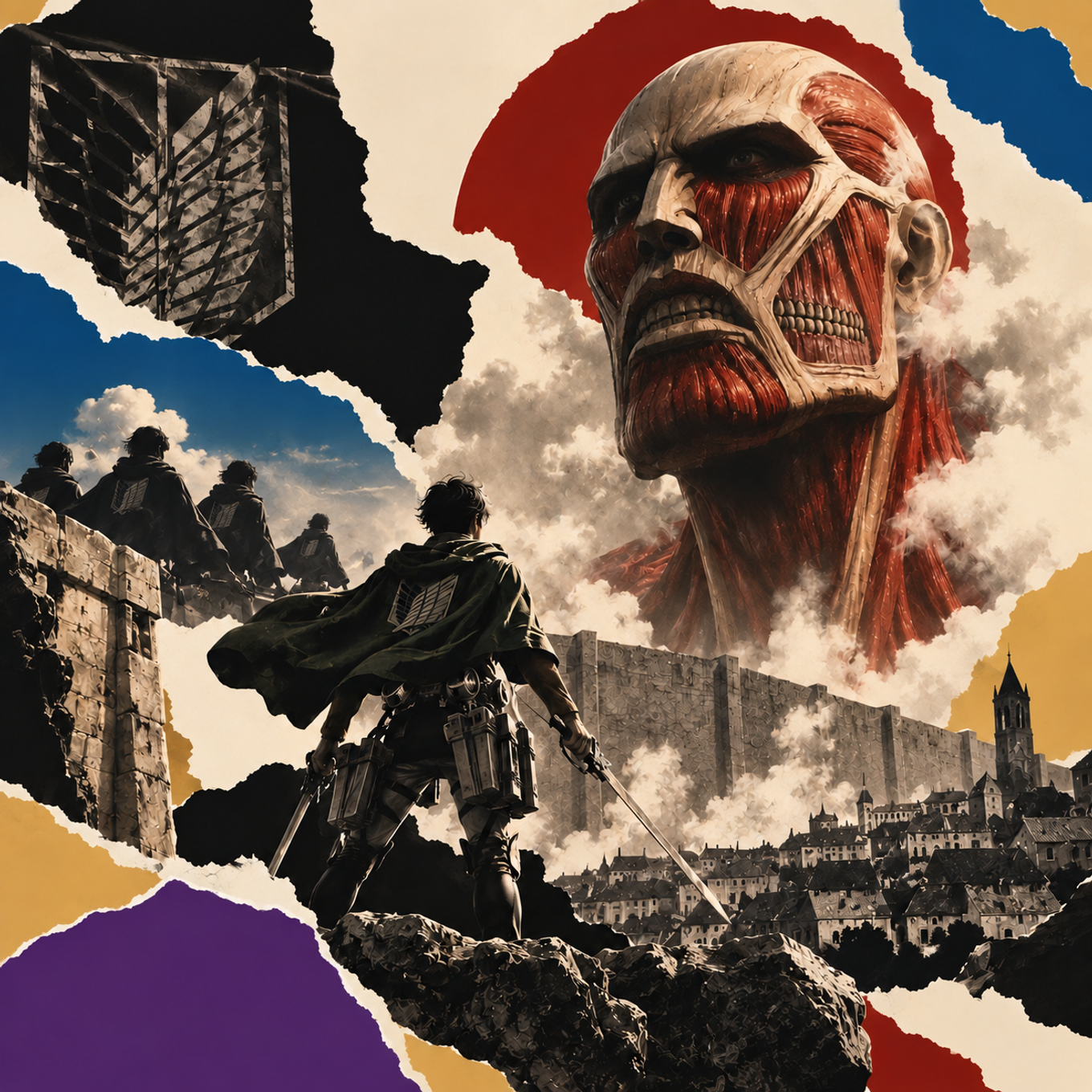
The hardest prison to escape is the one you never realized you were living in.
That is the setup. But the show is not really about titans. It is about what happens when a small number of people start asking: wait, what is actually out there? And the answer, when it comes, does not just change what they know. It dissolves everything they thought they were.
Plato’s Cave: When Reality Is an Illusion
Imagine being chained inside a cave from childhood. You cannot turn around. All you can see is the wall in front of you. Behind you, there is a fire, and between the fire and the prisoners, other people move objects back and forth. Their shapes pass across the wall as shadows.
That is the entire world the prisoners know. They give names to the shadows. They argue about what they mean. They recognize which one will appear next. The person who is best at remembering their order and predicting which one will appear next is honored as the wisest among them. They have spent their entire lives studying shadows on a wall, never knowing there is anything else to see.
Then one day, one of the prisoners is freed.
He is made to stand, turn around, and look toward the fire. For the first time, he sees the objects that had been passing between the fire and the prisoners, and the light makes it difficult for him to see.
He sees the objects being carried behind him and realizes that the shadows he had spent his life watching were being cast by them. He looks toward the fire, but the light makes it difficult for him to see.
Then he is dragged out of the cave and into the sunlight, where the brightness is almost unbearable. At first, he can hardly see anything at all. But as his eyes slowly adjust, he begins to make out the world around him. He sees the objects themselves, then their reflections in the water, and eventually he is able to look toward the sky and the sun.
It is only then that he begins to understand what the shadows really were. They were never the world itself, but only images of things that had been there all along. Everything he had spent his life studying had been real in some sense, but it had been only a small part of what actually existed.
After seeing the world outside the cave, he remembers the prisoners he left behind. He returns to the cave, wanting to tell them what he has discovered.
But when he returns to the cave, his eyes have to adjust to the darkness again. At first, he cannot see the shadows as clearly as he once could. The other prisoners notice this and laugh at him. They believe that leaving the cave has damaged his eyes and made him less capable of recognizing the shadows than before.
He tries to explain what he has seen. He tells them that the shadows are not the whole world, and that there is a world beyond the cave that they have never seen. He is describing colors to the blind, using words that exist but pointing at things that do not.
But the prisoners do not believe him. To them, the cave is the only world that exists. The shadows are all they have ever known, and they have no reason to believe that anything beyond them is real.
They turn against him. They mock him, reject what he says, and refuse to believe that anything exists beyond the cave. If he tries to free them, they would fight against him. They would not simply refuse to leave; they would try to stop him from ever returning to the shadows again. And if they were able to capture him, they would kill him rather than allow him to lead them out of the cave.
The prisoners remain chained to the wall, watching the shadows on the wall and believing that they are seeing reality. The one who escaped has seen the world beyond the cave, but the others would rather destroy that knowledge than give up the only reality they have ever known.
The philosophy behind Plato’s cave is that the reality we accept may be only a limited version of what actually exists.
The prisoners had spent their entire lives watching shadows. From their perspective, they were not ignorant. They were experts. They knew their world better than anyone.
But they were still only studying shadows…
It is easy to look at the prisoners and think, “How could they not realize there was more?” But that is exactly the point. If you had spent your entire life in the cave, why would you question it? You would have no reason to believe there was anything beyond what you could see.
We can do the same thing in our own lives. We can get used to certain beliefs, opinions, habits, and ways of seeing the world until they feel like reality itself. We may never stop to ask where they came from or whether they are actually true. And discovering that they are incomplete can be a painful realization.
The prisoner does not walk into the sunlight and immediately understand everything. His eyes hurt from the brightness, and he struggles to see until they slowly adjust to the light. Plato is showing that discovering something new can be difficult and uncomfortable at first. Sometimes the truth is difficult precisely because it forces you to admit that you were wrong about something you thought you understood.
But the story becomes even more interesting when he goes back. He has seen something the others have not, but that does not make them grateful to him. They laugh at him and reject what he tells them because, to them, he is the one who can no longer see clearly.
This is one of the most important ideas in the allegory. When a belief becomes part of how someone understands the world, challenging that belief can feel like an attack on everything they know.
The cave, then, is not just about ignorance. It is about how difficult it can be to realize that we are ignorant.
How Your Environment Shapes Your Reality
I have been to villages in the slums of Peru. Families in stone-boxed houses with no doors, no windows, no insulation against the cold that comes down off the mountains at night. A communal bucket, maybe a single pipe for the whole street. Children with bare feet running on dirt that turns to mud when it rains.
What stayed with me was not simply how different their lives were from mine. It was how normal that life seemed to them. These were the homes they had grown up in, the streets they knew, and the conditions they had learned to live with. They were not walking around thinking about how strange their world was. To them, it was simply the world they had been given.
I went there expecting to see people struggling, but what I saw was not as simple as that. People were laughing, arguing, cooking, playing with their children, going about their day. They were not standing around thinking about everything they did not have. They were living their lives.
Then I think about Monaco. I have also walked through a place where yachts fill the harbor, luxury cars line the streets, and wealth is so visible that it becomes part of the scenery. Two places that could hardly feel more different, yet there is something they have in common.
People become accustomed to the world around them. What seems extraordinary to one person can feel completely ordinary to another simply because it is what they have always known.
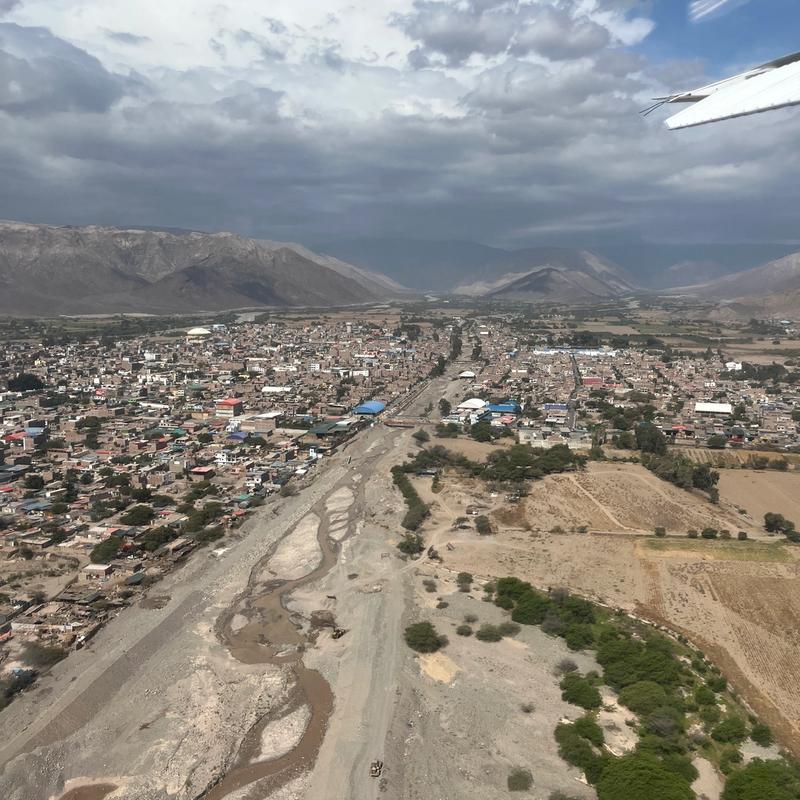

It made me realize some of my pity was a projection… I was grieving a loss they did not necessarily feel, because they had never had what I thought was missing.
The stone house is not a prison when you have never known anything else. The bucket is not degrading when it is the only way anyone you know has ever bathed. But that does not mean their situation is not worth changing. It means that seeing someone's life from the outside is not the same as living it yourself.
There is a difference between being deprived of something you have never known and knowing exactly what you are missing. One is a stone house. The other is a stone house with a window, just big enough to see what is outside, but not big enough to climb through.
Maybe the most difficult walls to recognize are the ones we built without realizing it. The life you grew up with, the people around you, the expectations you inherited, the things you were told were possible and impossible. None of them feel like walls because you have never had to think of them that way. They just feel like reality, so they become your reality.
Why the moment of knowing is also the moment pain begins.
There’s a piece of wisdom I’ve been thinking about for a long time. It goes like this:
This sounds simple, but it is not. Before you know it, there is no longer any gap between the life you have and the life you could imagine having, because your current life is simply what life is.
You do not see it as better or worse, because there is nothing to compare it to.
For most people living inside the walls, the world beyond them is something distant and largely unknown. There are people who question what lies outside, but for the majority, the walls are simply the boundary of the world they have grown up knowing.
In the same way, a Peruvian family who has never had a heated bathroom at 2 a.m. is not necessarily lying awake wishing they had one. It is not part of their experience of what a bathroom, or even a comfortable life, is supposed to be.
Then someone shows you the door, or you find it yourself. Suddenly, you have something to compare your life to. There is the life you know, and then there is the possibility of something different.
That is where the discomfort begins. It is not physical pain, and it is not exactly grief. It is the feeling of knowing that another way of living exists and realizing that the life you have always known is no longer the only one you can imagine.
Once you become aware of what is possible, your experience of your own life can change, even if nothing about your circumstances has changed. What you once accepted without thinking can suddenly feel like something you are missing. Comparison does not simply make you unhappy with what you have. Sometimes, it changes what you think you should have in the first place.
This may also be why people sometimes avoid information that could change the way they see themselves or their lives. It is not always because they are lazy or uninterested. Sometimes, consciously or subconsciously, they understand that once you become aware of something, it is difficult to go back to not knowing it.
And once you see that another way of living is possible, you have to decide what to do with that knowledge. You can act on it, or you can continue living as you were while knowing there is something different on the other side. In that sense, sometimes, not knowing is easier because once you know, you have to live with what you know.
The knowledge does not give you the life. It gives you the responsibility for the gap between the life you have and the one you now know is possible.
The cage you cannot see is the one you were born inside.
This is where it starts to get uncomfortable. So far, it has been easy to look at the people in these examples and see the cave as something that happens to someone else. The people inside the walls, Plato’s prisoners, the families I saw in Peru. But that is not really the point of the story. The cave only means something when you start asking where it might exist in your own life.
You have walls too. You have things you believe about the world that can feel so obvious that you never think to question where they came from. What you believe about relationships, what success looks like, what a good life is supposed to be, or what you think is possible for someone like you did not come from nowhere.
A lot of it was shaped by the family you grew up in, the culture around you, the time you were born into, the people who raised you, and the stories you were told about who you were supposed to become.
Your class, your culture, your family’s relationship with money, ambition, love, and emotion. You did not choose any of these things. You simply grew up with them, and over time, they became what felt normal to you.
The beliefs you have about what is possible for you, specifically. About what you deserve, what you do not deserve, and whether someone like you can actually have the things you want.
The questions you keep putting off. The conversations you avoid. The things you choose not to look into because, somewhere in the back of your mind, you suspect the answer might change something.
The people in Attack On Titan living inside the walls did not choose the world they were born into. Plato’s prisoners did not choose their chains. None of us gets to choose the circumstances that shape how we first see the world. But once you start to realize there might be a wall there, what do you do? Do you move toward it and see what is on the other side, or do you turn away?
Everyone thinks everyone else is the one looking at shadows.
And then there is an even harder thought to sit with. The people you look at and think are stuck in the cave may be looking at you and thinking the same thing. Each group can become convinced that they are the ones who see things clearly, that everyone else is the one who has been fooled. Every generation has people who believe they are the ones who finally figured it out.
Everyone thinks everyone else is the one looking at shadows on the wall.
This does not mean that every point of view is equally valid or that nothing can actually be known. Some people have a much narrower view of the world than others, and some beliefs are simply more disconnected from reality. The harder part is being willing to consider that some of your own beliefs might be wrong too. That is where real thinking begins.
The uncomfortable part is that being certain you are right does not necessarily mean you are closer to the truth. In fact, the person who is completely convinced they have escaped the cave may have stopped questioning things altogether.
The person who is still willing to ask, “What if I’m wrong?” may be seeing more clearly than they realize. Staying open to that question is not something you do once and then move on from. It is something you have to keep doing whenever you start feeling certain again.
But there is a limit to this. You cannot spend your entire life questioning every belief you have. At some point, you have to trust something. You have to make decisions, build relationships, choose what you believe, and actually live your life.
The goal is not to doubt everything. It is to know which parts of your understanding deserve another look, especially the beliefs you have never had a reason to question.
There is a difference between being open-minded and refusing to believe anything. One keeps you willing to change your mind when you encounter something that deserves it. The other keeps you from standing anywhere at all.
Being willing to question yourself does not mean you should stand for nothing. You should have things you believe in and principles you are willing to stand on. The point is not to tear everything down. It is to be willing to examine what you are standing on and change it when you find good reason to.
You cannot unsee. But you can choose what you do next.
Knowing about the cave does not automatically get you out of it. You can read Plato, watch Attack on Titan, visit Peru, intellectually understand that your perception is partial, and still make no meaningful change. Insight without action is just a more sophisticated shadow to stare at.
So what do you actually do with this?
You start by paying attention to the things you have always considered normal. Not everything you believe needs to be torn apart, and you cannot spend your life questioning every assumption you have. But when something feels so obvious that you have never thought to ask where it came from, that is worth looking at.
Why do I believe this? Who taught me this? What experiences made me see the world this way? And what would I think if I had grown up somewhere completely different?
You also have to be willing to encounter things that make you uncomfortable. Read something you disagree with. Talk to someone whose life looks nothing like yours. Go somewhere that challenges your idea of what normal looks like. You only understand the limits of your world once you step beyond them and see what was there all along.
At the same time, questioning your own perspective does not mean throwing away every belief you have. You need something to stand on. The point is not to become someone who believes nothing because everything might be wrong. The point is to know what you believe, understand why you believe it, and remain willing to change when you have a good reason to.
Maybe that is what getting out of the cave actually looks like. Not reaching some final state where you suddenly see everything clearly, but becoming more aware of the walls around you and more willing to look beyond them. Because there will always be another wall.
Here are 5 questions to sit with:
- If I discovered that one of my deepest beliefs was wrong, would I be willing to change my life because of it?
- What do I believe is impossible for me, and how do I know that belief is actually true?
- What truth am I reluctant to look at because accepting it would force me to change something about my life?
- If I had grown up in a completely different family, culture, or environment, what would I believe is normal that I now take for granted?
- What parts of who I am were actually chosen by me, and what parts were handed to me before I was old enough to question them?
These are not questions you need to answer right away. Sit with them for a while. Think about them on a walk, in the morning, or late at night when everything is quiet and there is nothing left to distract you.
Go Further
Attack on Titan
A story about walls, freedom, and the danger of believing you understand the world around you. As the characters discover more about what exists beyond their walls, everything they thought they knew begins to change.
The Republic by Plato
Read the original source behind the Allegory of the Cave. Plato’s story explores perception, knowledge, ignorance, and what happens when someone is forced to confront a reality beyond what they have always known.
Unknown unknowns
Search "Johari window" and "Donald Rumsfeld unknown unknowns." Two different framings of the same terrifying idea: the biggest gap in your map is the one you do not know is missing.
Go Somewhere Completely Unfamiliar
Spend time somewhere that challenges your idea of what is normal. A different country, culture, neighborhood, or way of life can reveal how much of your understanding of the world comes from simply being surrounded by it.
You will leave this article and go back to your normal life. Your routines, your beliefs, your ambitions, your relationships. Most of it will feel exactly the same as it did before you read any of this.
And maybe that is the strange part. The walls do not disappear just because you notice them. The cave does not vanish because you learn its name. There will always be things you cannot see from where you are standing, and there will always be parts of your own thinking that you have not learned to question yet.
But once you know that, you can start looking. And maybe that is enough. Not to escape every wall or find some final version of reality, but to occasionally stop and ask yourself what is on the other side.